
Resilience Coaching
 Resilience is the ability to cope positively, be in control of the way you respond to difficult situations and recover from adversity. Building resilience helps you manage stress and navigate through periods of uncertainty. Resilience coaching strengthens you from the inside out and protects you against burnout.
Coaching will equip you with the psychological techniques that keep pessimistic thinking under control. The silver lining is that tough times will test your resilience but can also strengthen you so that you’re better equipped to meet future challenges.
Resilience is something that can be learnt. Resilience coaching draws on Positive Psychology, CBT and Mindfulness practices to help you develop three forms of resilience.
- Resistance: The inner strength to adapt and keep going through tough times.
- Recovery: Regain confidence and bounce back after adversity.
- Reconfiguration: Emerge post adversity with new skills and greater strength.
Miriam Akhtar MAPP is a resilience expert and has worked with professionals across many sectors including frontline workers in medicine, finance and the tech sector. She is the featured expert in Real Calm, the Psychologies guide to resilience and has written chapters on resilience in Positive Psychology for Overcoming Depression and What Is Post-traumatic Growth. Miriam is a facilitator of the world-renowned Penn Resilience Programme and ‘trained the trainers’ at the Defence Academy of Great Britain to deliver a resilience programme to senior leaders in the military.
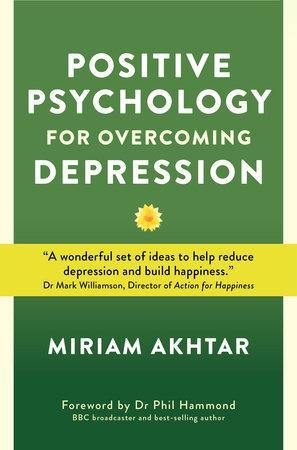 Positive Psychology Coaching for Overcoming Depression
Aimed at teaching you the practices that help you raise and recover your wellbeing. This coaching can support you if you feel at risk of depression, are experiencing a mild-to-moderate episode or ongoing low mood. The coaching draws on the evidence-based practices from the book Positive Psychology for Overcoming Depression. It offers a different approach to counselling or therapy, focusing on the techniques that build your wellbeing. It is not a substitute for clinical treatment but can complement it. A bibliotherapy study has shown that this approach does work.
“I turned to Positive Psychology because everything else I had tried in order to beat depression had eventually failed. Positive Psychology looks at where you want to be, rather than where you’ve been. Even just writing that sentence is refreshing! I was a little anxious to begin with but Miriam’s friendly and kind disposition soon put a stop to those feelings. It’s not easy putting decades’ worth of bad habits behind you but – and this is the important bit – neither is it so hard that you can only see failure. The coaching is clear and straightforward; the science behind it strong yet simple. The most prominent part for me was the session on optimism and pessimism. Miriam guided me through two ‘issues’ which had plagued me for some years. I could not believe that in less than one hour, I was able to dismiss the ugly feelings around these matters. I have now finished my coaching and finally feel I have a strong base from which to work from. For the first time in 30 years, I feel ‘positive’ about my depression.” Becci M, Glos.
We are fortunate to have a friend and colleague in Dr Chris Johnstone, author of Seven Ways to Build Resilience. Chris developed many of the tools we use in resilience coaching and training.
